
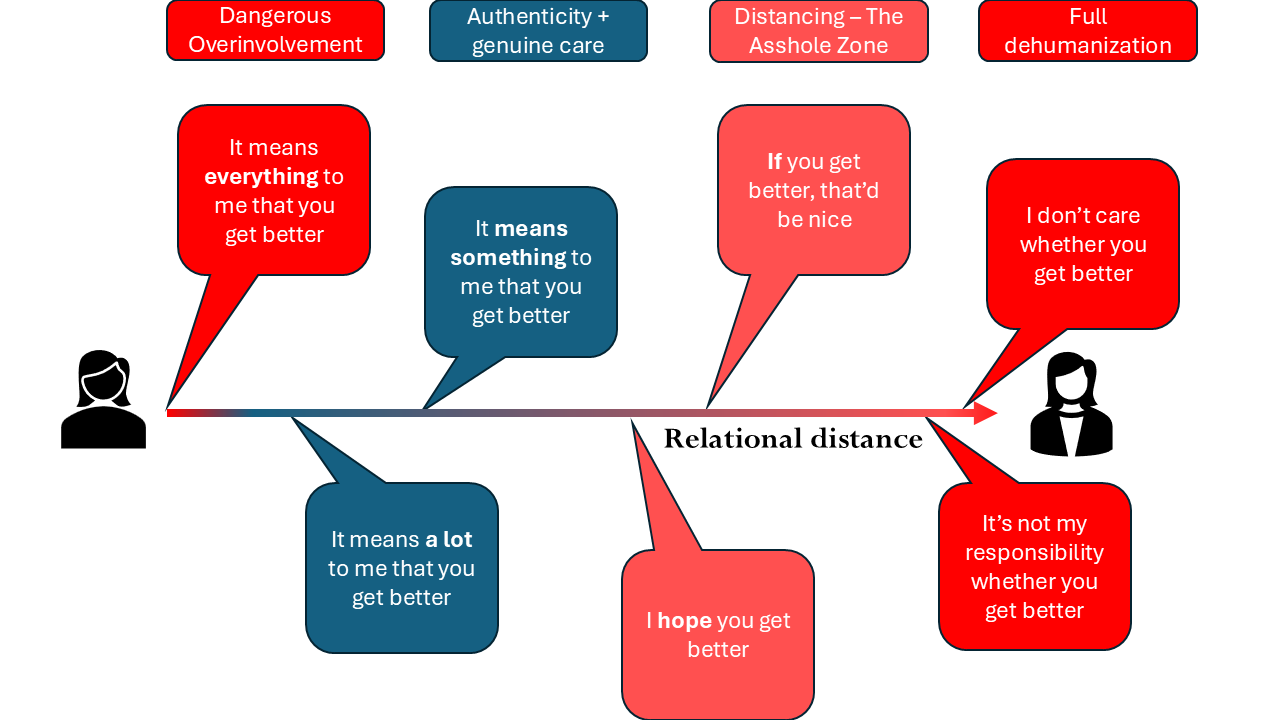
How close do you allow yourself to get to the people under your care? In this article we’ll be proposing a concept called ‘relational distance’. Relational distance describes the quality of and closeness in any given relationship, but is specifically developed for use in the mental health sector where those suffering (‘patients’) are catastrophically distanced from those who are supposed to help them (the ‘experts’).
A small relational distance means that you’ve got a deep understanding of the other person and that you care a great deal what happens to them. A large relational distance means you’ve got only superficial knowledge of the person and that you do not care that much what happens to them.
One of the more frightening psychological consequences of psychiatrization is the systemic reification of keeping and maintaing large relational distances to psychiatric patients. The entire language surrounding psychiatric treatment (!) works to distance the patient, allowing for a more technical and symptom-oriented approach than most people would be comfortable with if the relational distances were smaller.
The model below expresses the concept of the relational distance graphically. Notice how – professionally speaking – there are danger zones at either end of the spectrum. At the far left extreme we find overinvolvement. It is detrimental to ones’ own health and judgement to be involved to a degree where you can’t function in your own life.
At the far right we find a fully dehumanized attitude towards the person under our car,e, since at this relational distance the other person means less to us than a complete stranger. Dehumanization in psychiatry tends to occur when the patient isn’t being the good patient. Which means either objecting to diagnoses, rejecting or being skeptical of treatments, or simply just not getting better. This puts the psychiatric professional in a tough spot, since methods and symptom-focused treatments are all they have to offer. The professional is left with two options, relationally speaking: Either fighting for their patient’s right to better help, or dehumanizing them in order to quell the empathic injury that their hardship incurs.
Authenticity and genuine care: The sweet spot
So how close are you supposed to be to those under your professional care? If you’re claiming to be part of a mental support struture, then you should definitely care. The most difficult aspect of actually caring is responsibility. Once we allow those under our care to matter, the feeling of responsibility increases. This is natural, since humans categorize their relationships depending on mutuality, affection, trust, and reciprocity. This can be illustrated with circles of relationships:

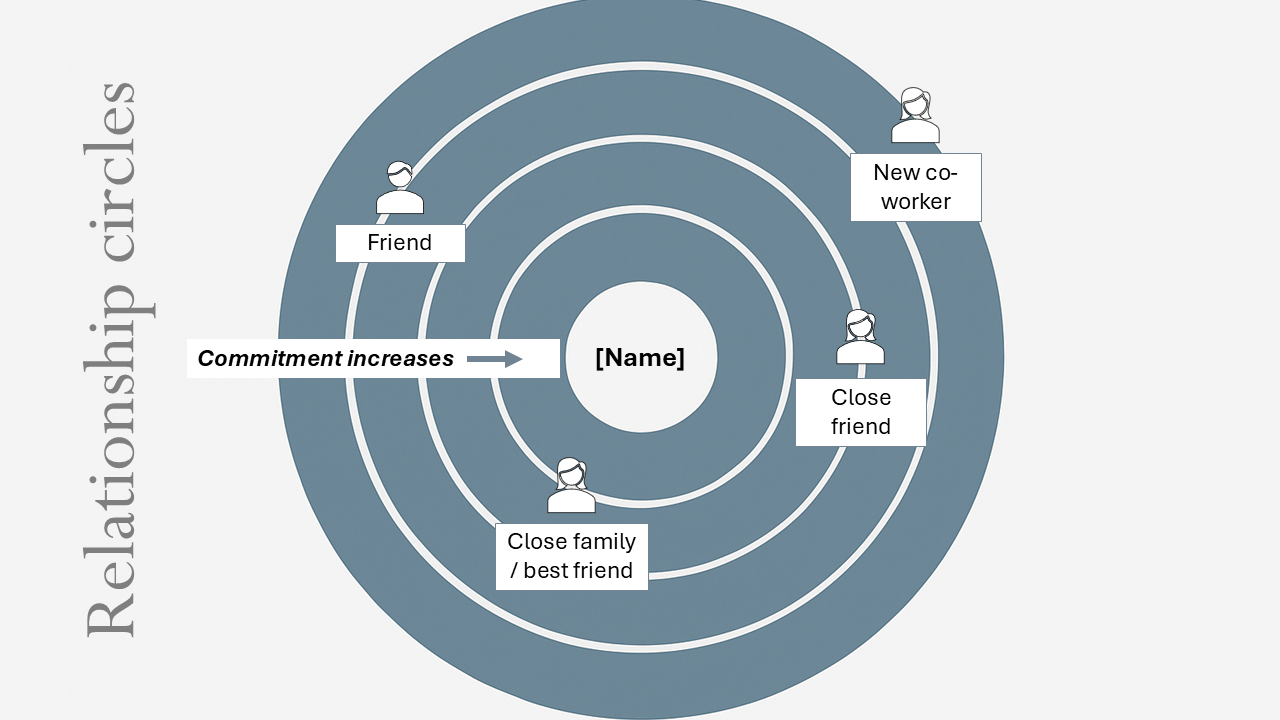
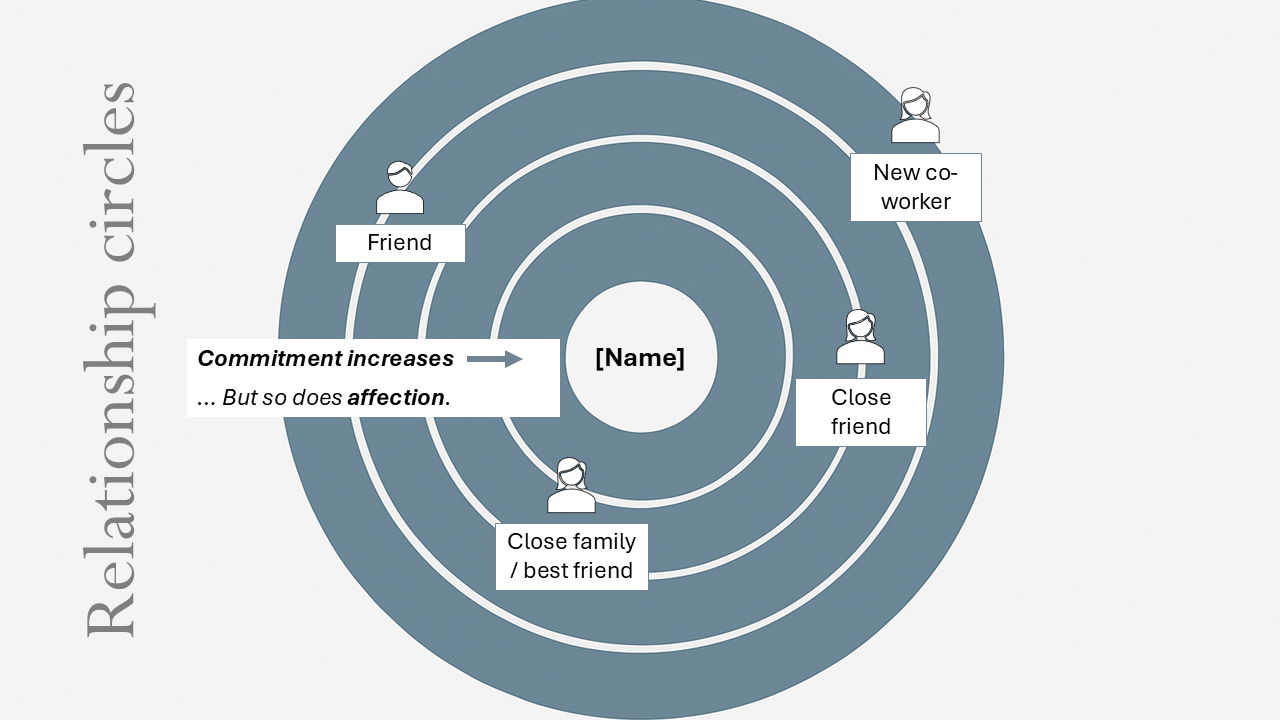
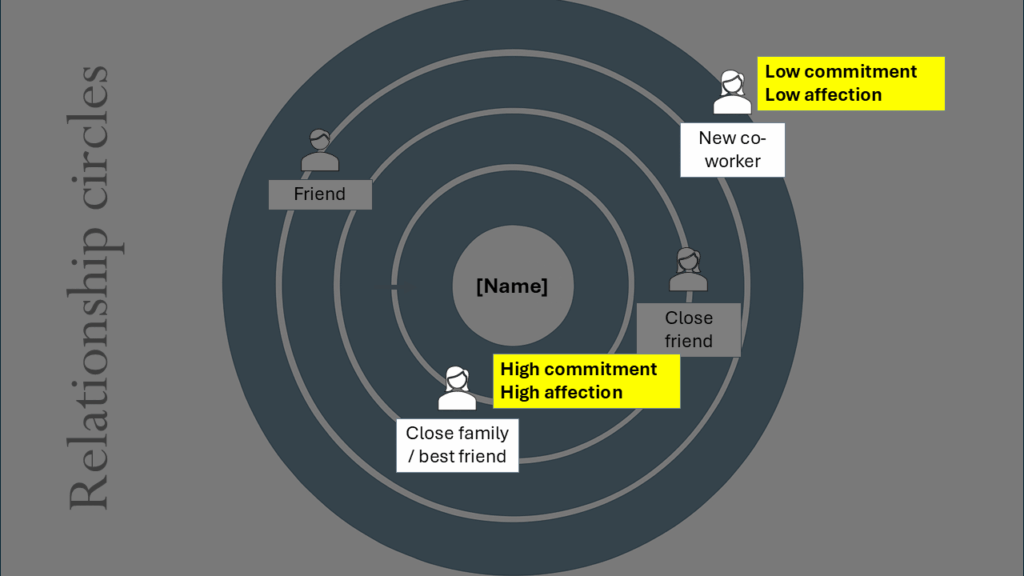
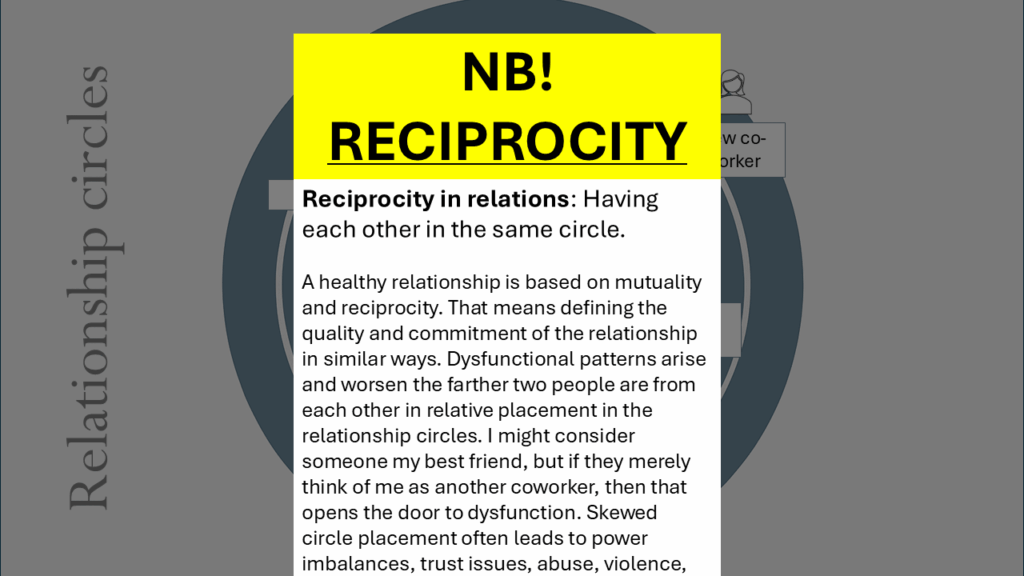
The model illustrates why we aren’t commited to people equally. Our basic human nature dictates that we trust, like, and depend on people differently, and our expectations follow our subconscious categorization of the other person. Certainly some people tend to treat strangers better than others, but even the most benevolent, altruistic person is servant to this fundamental human truth: We care more for people who feel closer to us in our circles.
The ramifications of this truth for professional practice are striking. As caregivers, we need to strike a difficult but oh-so-important balance. We need to genuinely care about the people we are supposed to help, but we also need to be able to live our lives, even though some of those under our care may suffer greatly for a time.
This calls for a new concept: Provisory relationships. Being someone’s provisory friend is absolutely allowed; it is even needed. Or they provisory parent. A provisory relationship is temporary by definition, but it is nontheless genuine. It is both possible and desirable to care genuine for those you have a professional responsibility for, without commiting to a private responsibility. And this is the thing that goes wrong in psychiatry and many other places: They are so busy shielding themselves from responsibility that they end up distancing themselves from the very people they purport to help. It’s basic human psychology. We dehumanize others when we’re set in a context that blocks genuine affection and connectedness.
Building alternatives and talking about despychiatrization should definitely entail this perspective of relational distancing. There’s a reason why peer run facilities tend to run better and provide better results than expert-driven facilities: They allow people to genuine care about each other.
Leave a Reply